|

The OTAVA GPCR Antagonist Library is a computationally designed collection created to explore GPCR-privileged chemical space with a focus on antagonist and inverse-agonist pharmacology.
The library integrates ligand-based machine learning, Bayesian modeling, and AI-driven scaffold optimization to enable efficient discovery of structurally diverse GPCR antagonists.
|
|
Read more...
|
|

800+ billion ready-to-synthesize virtual compounds for bRo5 drug discovery
ChemInfinita is a steadily expanding make‑on‑demand virtual space built, in collaboration with Alipheron, from commercial and proprietary building blocks and lab‑validated reaction templates—designed to prioritize robust synthetic feasibility at scale.
The space is searchable through Alipheron’s Hyperspace Search and Pharos‑3D platforms, enabling rapid virtual exploration and practical search‑to‑synthesis workflows.
A defining feature is its deliberate emphasis on beyond‑Rule‑of‑5 (bRo5) chemical matter-an increasingly important region of chemical space for discovery programs aimed at “difficult” targets and non‑classical binding sites.
|
|
Read more...
|
|
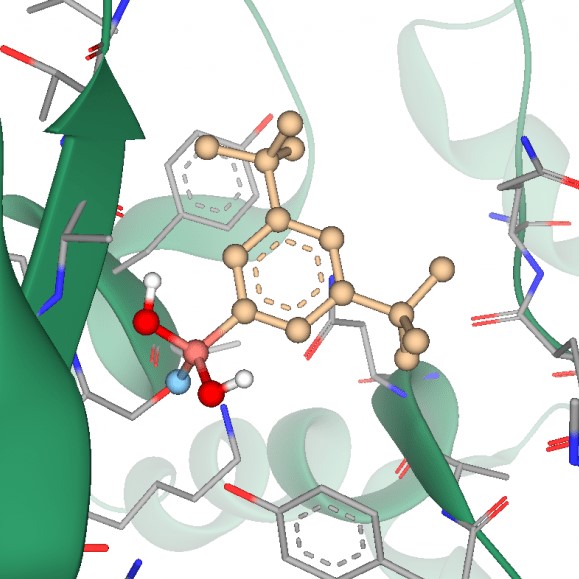
 Fragment-based lead design (FBLD) could be used to identify new metal-binding groups for metalloenzyme inhibitors. Several small-molecule chelators have been shown to effectively inhibit metalloproteins, therefore the design, Fragment-based lead design (FBLD) could be used to identify new metal-binding groups for metalloenzyme inhibitors. Several small-molecule chelators have been shown to effectively inhibit metalloproteins, therefore the design,
|
|
Read more...
|
|
|

GLP-1R (Glucagon-like peptide-1 receptor) is a clinically validated target involved in the regulation of glucose homeostasis, insulin secretion, and appetite control. Activation of GLP-1R has proven therapeutic value in the treatment of type 2 diabetes mellitus and obesity, making the discovery of novel small-molecule agonists an important direction in modern drug discovery.
The OTAVA GLP-1R Agonists Library was developed using an AI-guided cheminformatics workflow designed to identify structurally diverse compounds with predicted agonistic activity toward GLP-1R.
The following computational approaches were employed during the library design process.
|
|
Read more...
|
 Natural Product-Like Library Natural Product-Like Library has been designed as a special screening library containing synthetic compounds similar to natural products.
|
|
Read more...
|
|
|
|
|
|
|
Page 3 of 17 |

 HOME
HOME Overview