|

The Solubility Fragment Library consists of about 957 low molecular fragments with "Rule-of-Three" compliance and assured solubility in both DMSO (200mM) and PBS buffer (1mM). The library design included diversity filtering in order to provide chemical structure variety for your fragment screening program.
|
|
Read more...
|
|
|

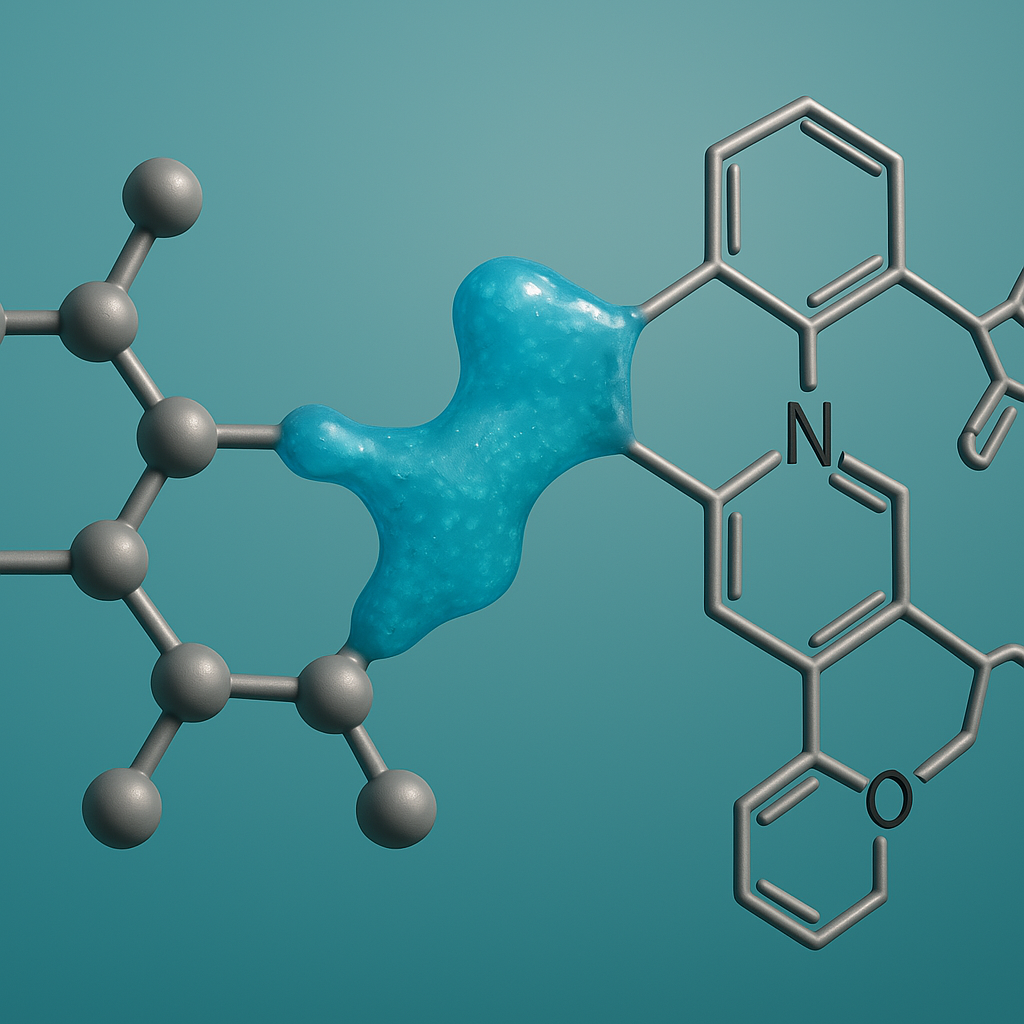
The OTAVA MolGluesLike Compounds Library is a scientifically curated collection of 2750 small molecules designed to enable the discovery and development of molecular glues — a groundbreaking modality in drug discovery that stabilizes or induces protein-protein interactions (PPIs).
These specialized compounds have the potential to redefine therapeutic strategies by targeting previously “undruggable” proteins, offering exciting opportunities in areas such as oncology, immunology, and neurodegenerative disease research.
|
|
Read more...
|
|
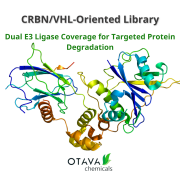
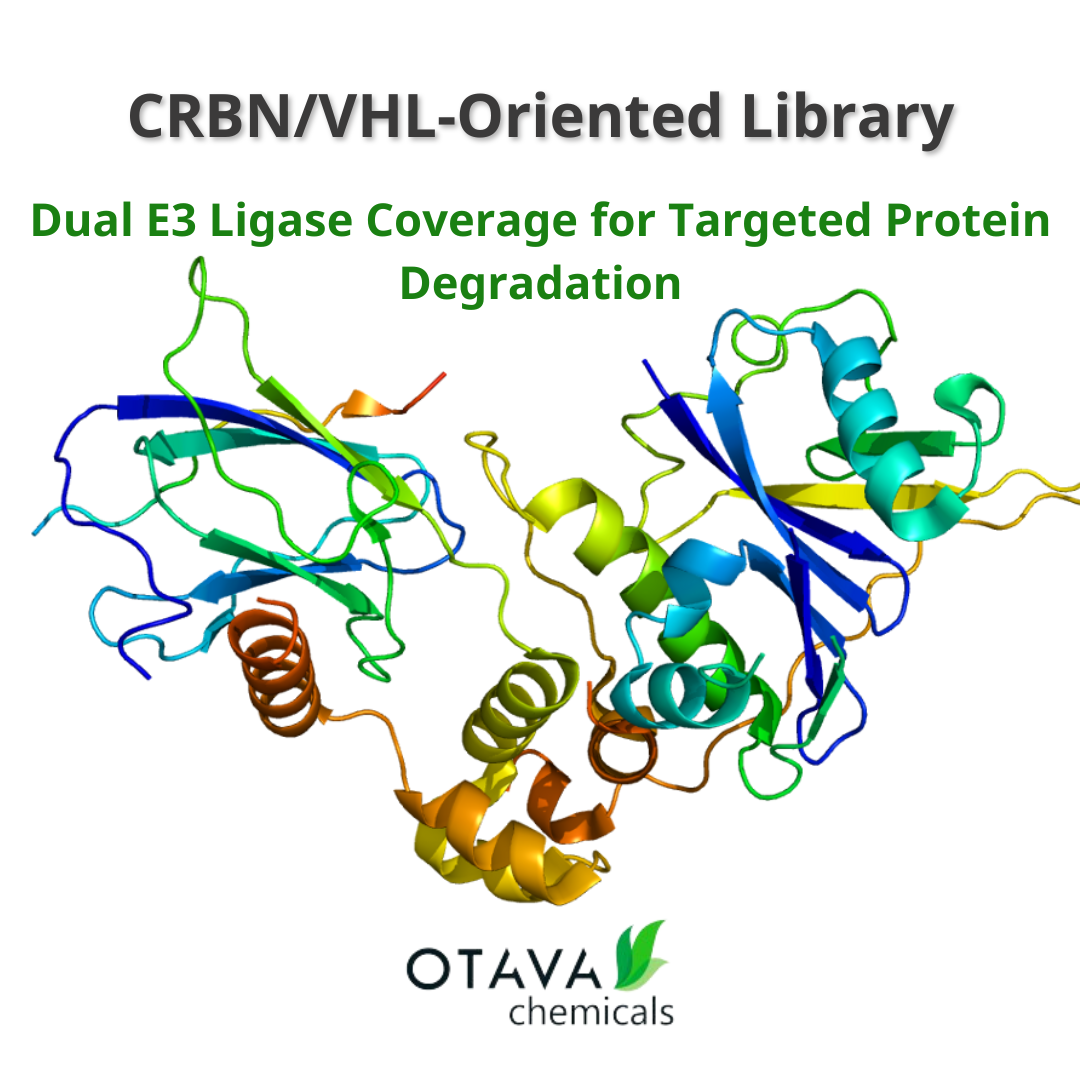
Targeted protein degradation (TPD) has emerged as a transformative drug discovery modality, enabling the selective elimination of disease-relevant proteins through hijacking of the cell's own ubiquitin–proteasome system. At the core of modern TPD strategies are E3 ubiquitin ligases - most prominently cereblon (CRBN) and von Hippel–Lindau protein (VHL) - which serve as recruiter platforms in both bifunctional PROTACs and molecular glue degraders.
|
|
Read more...
|
|
|
 Our company is currently offering about 100 new quaternary ammonium salts that could be of interest to your research. All quaternary ammonium salts are in stock, and a full list of the salts in our catalog is available upon request. Our company is currently offering about 100 new quaternary ammonium salts that could be of interest to your research. All quaternary ammonium salts are in stock, and a full list of the salts in our catalog is available upon request.
Synthetic experience of Otava chemists allows to carry out custom syntheses of even more complex structures of quaternary ammonium salts at a reasonable price.
|
|
Read more...
|
|
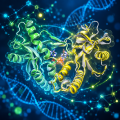
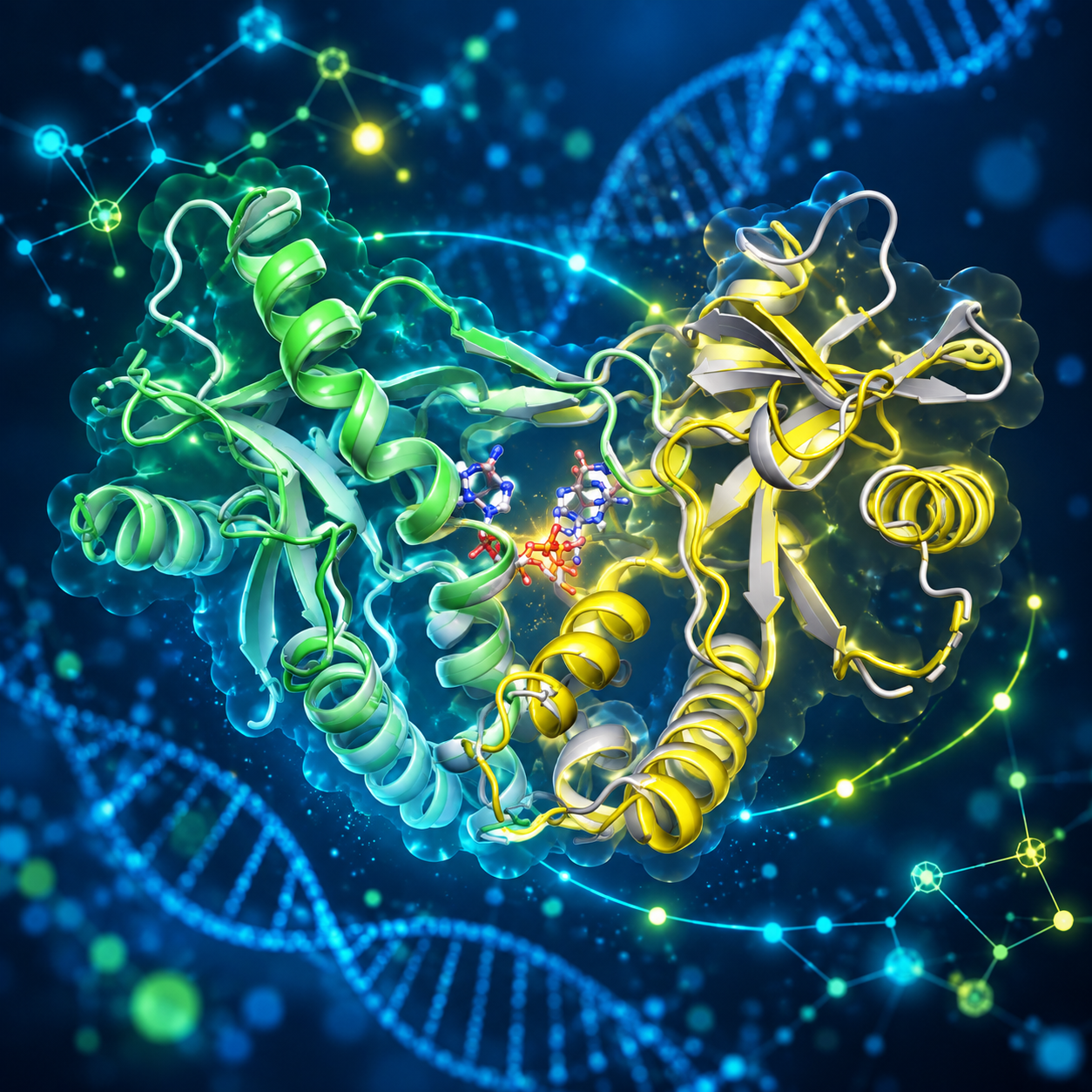
STING (Stimulator of Interferon Genes), encoded by the STING1 gene (also known as TMEM173), is a key mediator of innate immune signaling. Upon detection of cytosolic DNA by cGAS, the second messenger 2′3′-cGAMP is produced and binds to STING, triggering downstream signaling that induces type I interferons and pro-inflammatory cytokines through the IRF3 and NF-κB pathways. This positions STING as a central regulator of antiviral defense and immune surveillance.
|
|
Read more...
|
|
|
|
|
|
|
Page 1 of 17 |

 HOME
HOME Overview